What Happens During a Vajrayana Puja and Why It Matters
The first puja many people attend can feel both captivating and unfamiliar. Monks and lay practitioners chant in rhythm, bells ring at key moments, drums and cymbals mark transitions, and offerings are arranged carefully before the shrine. That said, for anyone exploring Vajrayana Buddhism nearby, attending a puja is often one of the first ways to experience the tradition directly. Knowing what each part of the ceremony represents can make the experience easier to follow and more meaningful.
A puja is a devotional ceremony that combines prayer, chanting, visualisation and offering. It may be dedicated to a particular enlightened figure, such as Tara, Medicine Buddha or Chenrezig, and is often held on auspicious dates or for purposes such as healing or protection. While details vary between lineages, most pujas move through three broad stages.
Opening the Puja
The first stage establishes the foundation and motivation for everything that follows.
Taking Refuge
Most pujas begin with prayers of refuge in the Buddha, the Dharma and the Sangha. This opening reminds participants of the foundation of their practice and their trust in the path.
Generating Bodhicitta
Building on refuge, participants generate bodhicitta, the wish to attain enlightenment for the benefit of all beings. This sets the motivation for the entire ceremony, so that everything that follows is dedicated not only to personal benefit but to the well-being of others.
The Main Practice
With the motivation in place, the puja moves into its central rituals.
Invocation and Visualisation
Practitioners first invite the enlightened figure at the centre of the puja to be present. Through guided visualisation, they imagine this figure in front of them or above their heads, radiating light and compassion. Visualisation, a distinctive feature of Vajrayana practice, helps cultivate qualities such as wisdom and kindness.
Offerings and Praise
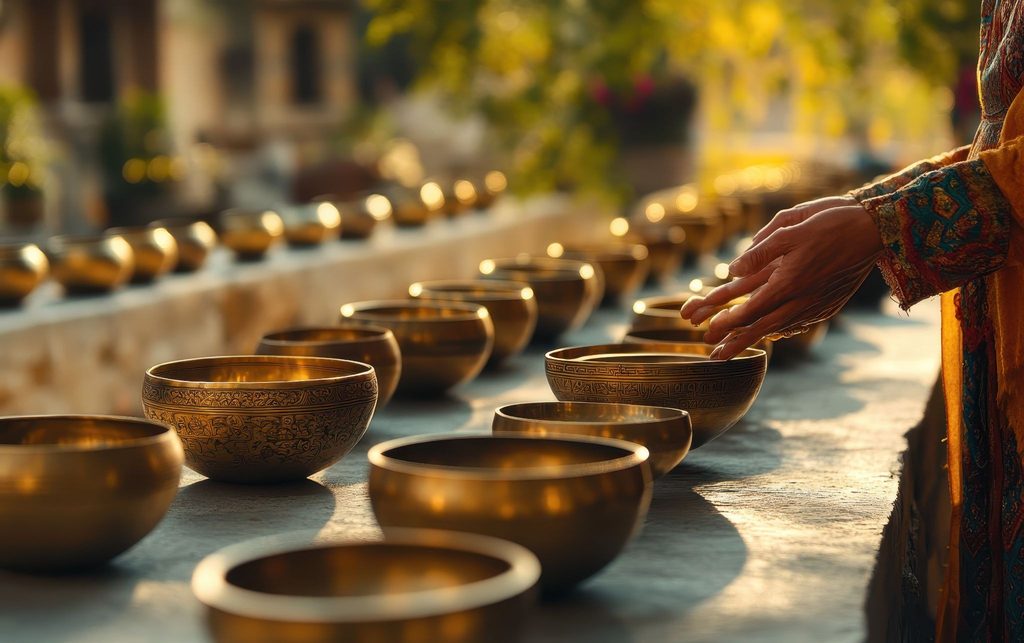
Once the figure has been invoked, offerings are presented, both physically and through visualisation. These may include water, flowers, incense, light and food, as well as the mandala offering, which symbolises offering the entire universe. Verses of praise are chanted to honour the qualities of the enlightened being. Visitors attending a puja at a lavender temple or any other Vajrayana centre may notice that chanting often changes rhythm during this section, with instruments marking each offering.
Mantra Recitation
Following the offerings, many pujas reach their heart in the repeated recitation of a mantra associated with the central figure. Practitioners may use prayer beads, called malas, to count repetitions. Mantra recitation is believed to focus the mind and strengthen the connection established through visualisation, while the steady rhythm helps participants settle into a meditative state. Some pujas also include a period of silent meditation afterwards.
Closing the Puja
The final stage turns the practice outward again, linking the ceremony back to its opening motivation.
Purification and Requests
As the puja draws to a close, some ceremonies include prayers acknowledging past harmful actions and expressing the intention to change, which is seen as a way of purifying the mind. Requests may also be made for blessings, guidance or the removal of obstacles for oneself and others.
Dedication of Merit
Every puja ends with the dedication of merit. Participants dedicate any positive energy created during the ceremony to the benefit of all beings. This final step mirrors the bodhicitta generated at the beginning and ensures that the practice is shared rather than kept for oneself.
Joining a Puja as a Visitor
Newcomers are generally welcome to attend. A few simple practices can help, including:
- Arriving early to find a seat and receive any chanting texts.
- Following along quietly, even without knowing the words.
- Keeping phones silent and avoiding photography unless permitted.
- Asking volunteers about appropriate offerings or customs.
Finding Meaning in the Sequence
Seen as a whole, a puja moves in a deliberate arc, from setting a compassionate intention to sharing the benefit with others. Even without understanding every word, visitors can sense this rhythm, and many return to discover how each ritual deepens with time and familiarity.
Reach out to Thekchen Choling Singapore to join our next puja and practise alongside our community.